


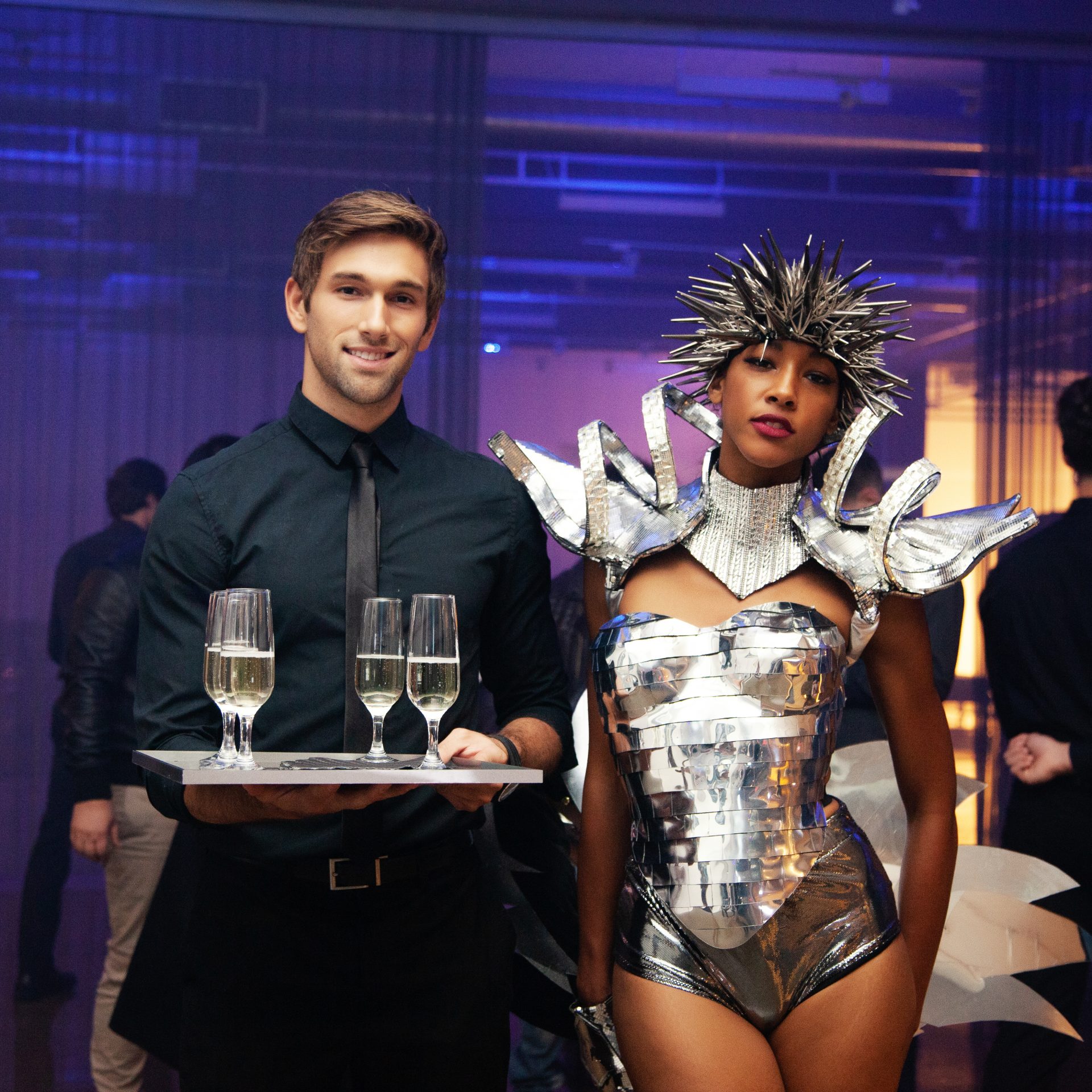
Luxury fashion events depend on more than a beautiful venue and a carefully designed collection. The right people behind the scenes and on the floor shape guest impressions, brand perception, and the overall success of the event. Fashion week staffing requires professionals who recognize the pace, presentation, and expectations of the industry.
Fashion week event staff control arrivals, protect seating plans, assist VIPs, support sponsors, and respond when schedules change. One weak handoff can affect press access, celebrity arrivals, seating, and the show start.
Fashion event staffing needs a written plan. Every position should have a purpose, call time, uniform, supervisor, and escalation procedure. A request to “send twenty polished people” is not enough for a runway show or launch.
Detailed staffing also reduces delays between doors, seating, show cues, receptions, and sponsor obligations.
Runway Waiters brings model and hospitality talent together under one agency. Clients can build teams around service ability, appearance, personality, and assignment needs.
Common Fashion Week Staffing Structure
The final team depends on the venue, entrances, guest count, show format, and sponsor obligations.
Front-Door Greeters
Greeters direct guests to check-in, separate media, identify VIP arrivals, and prevent crowding. They need the venue layout, entrance rules, and access contact. They should never promise entry without authority.
Credential and Guest-List Staff
Check-in representatives verify names, scan tickets, issue credentials, and flag missing registrations. Unlisted guests should be referred to the designated producer, publicist, or client representative.
Seating and Usher Teams
Ushers guide guests, protect reserved seats, keep aisles open, and manage late seating. They must understand standing-room access, press sections, buyer seating, and sponsor allocations. The team needs a final seating chart before doors open.
VIP Hosts
VIP hosts receive celebrities, executives, editors, buyers, and sponsors. They coordinate with security, publicists, photographers, and front-of-house leads. Staff should not request photographs or share arrival details.
Backstage Runners and Dresser Support
Backstage runners move information and materials between production, wardrobe, styling, talent, and front of house. Dresser support helps organize garments and changes under the wardrobe lead.
These are specialized positions. A strong greeter or server is not automatically qualified backstage.
Model Servers and Bartenders
Runway Waiters selects servers and bartenders who combine strong hospitality skills with a polished, camera-ready appearance.
They understand tray service, guest interaction, bar setup, and the pace of high-profile fashion events. Their presentation complements the brand, but their service training remains just as important.
Bartenders should be booked according to local alcohol-service rules, venue requirements, expected volume, and drink complexity.
Sponsor Brand Ambassadors
Brand ambassadors explain products, manage gifting, guide activations, and communicate approved campaign points. They should know prohibited claims and how to refer technical or press questions.
Step-and-Repeat Attendants
These attendants organize the photography line, keep guests moving, and coordinate with photographers or publicists.
On-Site Team Captain
The captain confirms attendance, runs the briefing, assigns positions, coordinates breaks, relays changes, and handles problems. This person needs direct access to the producer or client contact.
Different Roles Require Different Skills
Runway, backstage, hospitality, and activation positions are not interchangeable.
Front-of-house staff need guest-list discipline, clear communication, and knowledge of seating and entrances. Backstage teams need speed, accuracy, and comfort in restricted production areas. Hospitality staff need tray control, bar awareness, food-service timing, and confidence around guests.
Brand ambassadors need product knowledge and stamina. A capable NYFW staffing agency matches people to the role rather than only appearance or availability.
Practical Staffing Ratios
There is no universal ratio, but planners can use working ranges for early budgeting.
For check-in, one representative per 50 to 75 expected arrivals may work when the list is clean and entry is staggered. Multiple lists, strict identification checks, or a short arrival window may require more coverage.
For assigned runway seating, one usher per 30 to 50 guests is a useful starting point. Complex venues, several sections, or heavy VIP attendance may need additional ushers.
For a cocktail reception, one server per 25 to 35 guests may suit passed drinks and light bites. Several rooms, long routes, or continuous clearing will increase the need.
One bartender per 50 to 75 guests may work for beer, wine, and a limited cocktail menu. Custom cocktails, several bars, or a concentrated rush require more bartenders and barbacks.
These are planning ranges, not fixed rules. The venue, service format, program, and guest profile determine the final count.
Example Team for 300 Invited Guests
For a fashion presentation with 300 invited guests, a team may include four check-in representatives, six ushers, two VIP hosts, eight hospitality staff, and one captain.
The check-in team could divide the list by surname or invitation category. Ushers would cover key rows and standing areas. VIP hosts would manage priority arrivals. Hospitality staff could handle pre-show and post-presentation service.
The team would need adjustment for multiple entrances, a large press area, sponsor activations, backstage runners, a full bar, or extensive gifting.
Call Times, Rehearsals, and Briefings
Staff should arrive early enough to change, inspect the venue, test scanners, study the guest list, walk seating routes, and review restricted areas.
A straightforward reception may need a 60- to 90-minute pre-event call. A runway show with assigned seating, credentials, sponsor activations, or rehearsals may require two to four hours.
Rehearsal should be required for positions tied to cues, guest movement, or backstage timing. Staff need door times, late-arrival rules, and routes that must remain clear.
The briefing should cover leadership, emergency exits, restrooms, VIP names, media rules, breaks, phone use, and escalation contacts.
All-Black Uniforms and Grooming
All-black attire is common because it keeps staff consistent and avoids competing with the collection. Still, “all black” must be defined.
Clients should specify suits, dresses, shirts, trousers, shoes, and outerwear. A black T-shirt and sneakers differ from tailored black suiting.
Grooming directions should cover hair, makeup, facial hair, nails, jewelry, fragrance, visible tattoos, and branded accessories. Instructions belong in the advance brief, not a message sent shortly before call time.
Runway Waiters can select talent by visual direction, personality, and role when staff must complement a designer, sponsor, or venue.
Guest-List Escalation, Celebrities, and Press
Staff should never improvise access decisions involving celebrities, media, buyers, or sponsors.
When a name is missing, the representative should stay courteous, move the discussion away from the main line when possible, and contact the authorized decision-maker. Staff should not reveal internal list notes or blame the client.
Press access should follow credential type. Photographers, editors, broadcasters, and influencers may have different permissions. A media badge does not automatically allow backstage entry.
Celebrity arrivals need a clear handoff among publicists, security, VIP hosts, and photographers. The plan should state who receives the guest, which entrance they use, and where they are escorted.
Last-Minute Schedule Changes
Fashion schedules change. A show may start late, production may hold seating, a celebrity may arrive after doors close, or a sponsor activation may move.
The captain should receive changes from one authorized contact and relay them clearly. Sensitive guest details should not enter broad informal chats.
Staff should avoid saying, “We do not know.” A better response is, “The schedule has been adjusted. I am confirming the updated timing now.”
Pricing, Minimums, and Booking Details
Pricing depends on role, city, date, call time, shift length, experience, rehearsal, uniform, travel, and booking lead time.
Clients should ask about shift minimums, overtime, meal breaks, parking, transportation, cancellation terms, and replacement procedures. A four-hour event may require a longer paid shift when rehearsal and breakdown are included.
Before requesting a quote, share the date, venue, guest count, format, roles, uniform, schedule, bar plan, sponsor duties, and on-site contact.
Common Operational Mistakes
Common mistakes include too few check-in staff, no guest-list escalation contact, an outdated seating chart, unclear uniforms, late guest-list delivery, and poor staff access instructions.
Other failures include assigning hospitality workers backstage, omitting a captain, ignoring breaks, or having no absence plan. Identify who may authorize overtime, change roles, dismiss staff, and request replacements.
Why Brands Choose Runway Waiters
Runway Waiters combines model and hospitality talent under one agency. Our roster includes servers, bartenders, hosts, models, and brand ambassadors.
Talent can be selected according to role, appearance, personality, communication style, and event direction. Clients do not need to source models, servers, hosts, and ambassadors from unrelated vendors.
With bases in New York City, Los Angeles, and Miami, Runway Waiters serves major fashion markets. Our work centers on communication, creativity, integrity, and attention to detail.
For a runway show, presentation, launch, retail event, or after-party, contact Runway Waiters with the date, venue, guest count, roles, schedule, uniform, and service plan. Early booking gives brands more choice before key Fashion Week dates fill.
FAQs
What Should a Brand Send Before Booking?
Send the date, city, venue, guest count, format, call time, end time, roles, uniform, guest-list procedure, sponsor duties, rehearsal needs, access restrictions, and on-site contact.
How Early Should Fashion Week Staff Be Booked?
Book major Fashion Week dates as early as possible, especially for large teams or specialized roles. Late requests may limit talent selection, rehearsal availability, and uniform options.
Can One Person Cover Several Roles?
Sometimes, but not during overlapping periods. Check-in, seating, bartending, backstage work, and brand activation require different preparation. Assign roles according to skill, timing, and access needs.